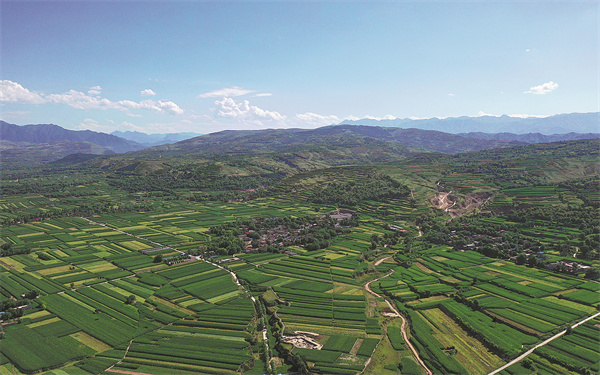
Siwa Site
Introduction
The Siwa Site, located in Lintao county, Gansu province, China, is a significant archaeological site that has provided invaluable insights into the origins and early development of Chinese civilization. Situated west of Jiulong Mountain and near the Taohe River, a tributary of the Yellow River, the site spans approximately 2 million square meters and is associated with the Majiayao culture, an ancient Neolithic culture dating back over 5,000 years. The discoveries at the Siwa Site have showcased the developmental level and civilization of early societies on the Loess Plateau in western China, filling crucial gaps in the understanding of the upper reaches of the Yellow River during a key period in Chinese history.
History
The Siwa Site is closely linked to the Majiayao culture, which originated from the Yangshao cultural tradition and expanded northwestward and southwestward during its development. This culture played a pivotal role in nurturing various archaeological cultures in western China and pioneering early East-West communication corridors. The Majiayao culture is widely recognized for its painted pottery craftsmanship, which reached unparalleled heights in material selection, elegant forms, ingenious designs, resplendent decorations, and exquisite firing techniques. These artifacts represent the pinnacle of prehistoric Chinese painted pottery and the culmination of Neolithic ceramic art.
Archaeological work at the Siwa Site began in 1945, but significant breakthroughs were achieved between 2018 and 2024. The discoveries revealed a high-level, central settlement of the Majiayao culture, featuring sophisticated planning, cultural richness, and advanced levels of civilization. The settlement includes three massive parallel rectangular moats with right-angle turns, forming an enclosed area of nearly 300,000 square meters. This moat system, constructed and primarily utilized around 5,000 years ago, represents the earliest known multi-rectangular moat structure in China.
Archaeological Discoveries
Major Excavations
Excavations at the Siwa Site have uncovered a wealth of archaeological evidence, including nearly 100 residential foundations, crypts, pits for garbage disposal, and several tombs spanning the early and middle stages of the Majiayao culture. The triple-layered moat system discovered at the site is particularly noteworthy. The moats encircle a nearly square area covering almost 300,000 square meters, with each layer 8 to 9 meters apart and having a width of 9 to 10 meters. The inner moat stands out due to its richer evidence of habitation, including house foundations, pits, pottery kilns, and a greater number of animal bones compared to the outer moats. Archaeologists believe the inner moat functioned as a ditch-like production and living area, while the outer two were used for defense and water drainage.
Artifacts and Relics
The Siwa Site has yielded an extraordinary collection of artifacts, particularly painted pottery vessels adorned with intricate designs such as graceful curves, dynamic water ripples, swimming fish, soaring birds, and lifelike faces. These vessels resemble vivid paintings glowing with artistic brilliance and demonstrate the advanced skills of the Majiayao people. The pottery-making areas and kilns discovered within the moated settlement indicate large-scale production that spanned several hundred years, suggesting the site was a regional pottery production center. Additionally, stone-artifact processing workshops and sets of stone semi-manufactured goods were found, further highlighting the site's role as a hub of handicraft production.
Cultural Significance
The Siwa Site holds immense cultural significance as it provides concrete evidence of the advanced social organization and civilizational maturity of China's western highland communities. The findings enrich the "diverse-yet-integrated" paradigm explaining the origins of Chinese civilization and affirm the profound depth and enduring continuity of Chinese culture. The Majiayao culture, with its emphasis on handicrafts and commerce alongside agricultural production, distinguished itself through specialized painted pottery production and trade networks. This culture's development and growth laid the cultural foundation for China's western frontier area in the prehistoric era, paving the way for early cultural exchanges between the East and the West.
Moreover, the stylistic similarities between Majiayao painted pottery and artifacts from the Cucuteni-Trypillia culture in western Eurasia provoke profound contemplation about early Eurasian cultural exchange. These parallels suggest both convergent evolutionary paths and possible contacts between eastern and western Eurasian populations thousands of years ago, highlighting the interconnectedness of prehistoric civilizations.
Preservation Efforts
Efforts to preserve the Siwa Site have focused on maintaining its archaeological integrity and promoting further research to uncover additional insights into the Majiayao culture and its contributions to Chinese civilization. The discoveries at the site have been recognized as one of the top six new archaeological findings in China in 2024, underscoring its importance in the field of archaeology. Researchers continue to prioritize the study of settlement archaeology, emphasizing the clear layout of the site to decode its secrets and generate new academic insights.
Tourism
Visitor Information
The Siwa Site is a destination of interest for those seeking to explore China's rich archaeological heritage. Visitors can access the site in Lintao county, Gansu province, and experience firsthand the remnants of the Majiayao culture. Guided tours and informational exhibits provide an in-depth understanding of the site's historical and cultural significance.
Attractions and Activities
Tourists can explore the site's extensive archaeological remains, including the triple-layered moat system, residential foundations, pottery kilns, and crypts. The painted pottery artifacts on display offer a glimpse into the artistic brilliance of the Majiayao people. Additionally, visitors can learn about the site's role in early East-West cultural exchanges and its contributions to the origins of Chinese civilization.








